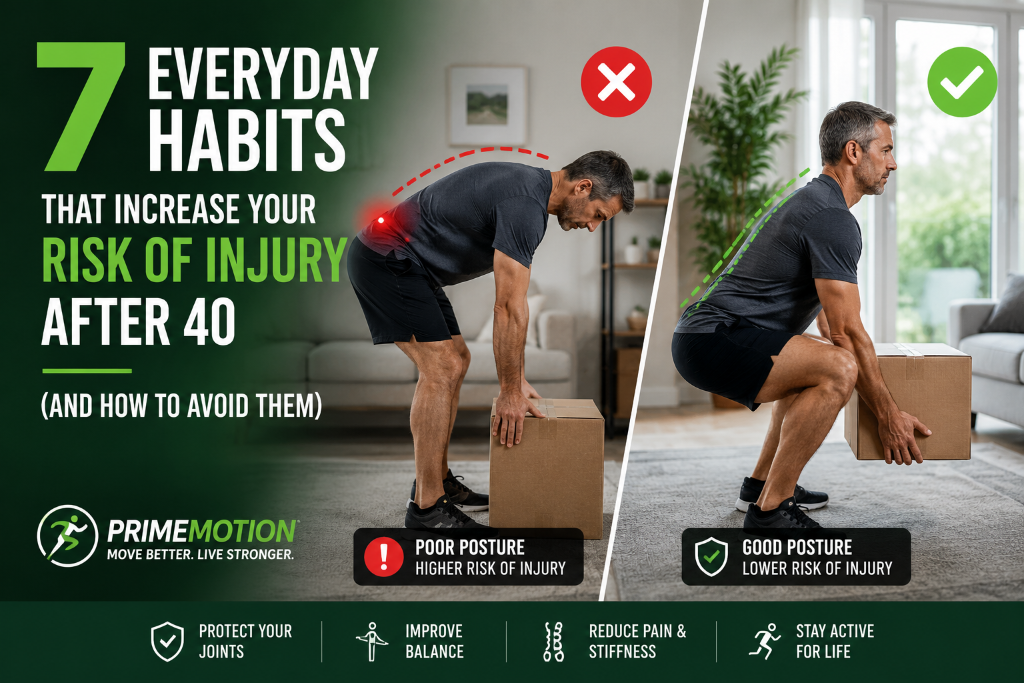
7 Everyday Habits That Increase Your Risk of Injury After 40 (And How to Avoid Them)
Move Better. Live Stronger.
7 Everyday Habits That Increase Your Risk of Injury After 40 (And How to Avoid Them)
As we get older, most injuries don't happen because we're exercising too much—they happen because of the small movement habits we repeat every single day.
Many adults notice more stiffness, sore joints, or recurring aches after 40. While aging does change the body, many injuries are preventable with better movement, improved mobility, and smarter daily habits.
Here are seven common habits that may be increasing your injury risk without you realizing it.
1. Sitting for Long Periods
Extended sitting causes the hip flexors to tighten, weakens the glutes, and reduces mobility throughout the spine.
Over time this can contribute to:
- Lower back pain
- Hip pain
- Poor posture
- Knee discomfort
What to do
Stand and move every 30–60 minutes. Even a two-minute walk or a few mobility exercises can make a significant difference.
2. Ignoring Minor Pain
Pain is your body's way of telling you that something needs attention.
Small aches often become larger problems when ignored. Instead of pushing through discomfort, identify the cause early and adjust your movement or training accordingly.
3. Skipping Your Warm-Up
Many people spend longer driving to the gym than warming up once they arrive.
Cold muscles and stiff joints are more susceptible to strains. Spend five to ten minutes preparing your body by increasing blood flow and moving your joints through comfortable ranges of motion.
4. Losing Balance and Stability
Balance naturally declines with age if it isn't trained.
Poor balance increases the likelihood of:
- Falls
- Ankle sprains
- Knee injuries
- Hip fractures
Improving balance is one of the simplest ways to stay independent and active throughout life.
5. Poor Posture Throughout the Day
Posture affects how every joint in your body functions.
Rounded shoulders, a forward head position, and a weak core place unnecessary stress on the neck, shoulders, and lower back. Small posture improvements made consistently often reduce pain and improve movement quality.
6. Doing Too Much Too Soon
One of the biggest causes of exercise-related injuries is increasing intensity too quickly.
Whether you're beginning a new workout routine or returning after time away, gradual progression allows muscles, tendons, and joints to adapt safely. Consistency always beats intensity.
7. Never Measuring Your Movement
Many people monitor their weight but never assess how well they move.
Mobility, balance, posture, flexibility, and movement quality provide valuable information about future injury risk. Regular assessments help identify weaknesses before they become painful limitations.
How PrimeMotion Helps Reduce Injury Risk
PrimeMotion was designed to help adults move better and stay active for years to come.
Using personalized assessments, progress tracking, AI-powered recommendations, and guided mobility programs, PrimeMotion helps you identify movement limitations early and build healthier movement habits.
Instead of reacting to pain, you can begin improving how your body moves before injuries occur.
Final Thoughts
Growing older doesn't automatically mean accepting pain or recurring injuries.
The choices you make every day—how you sit, move, exercise, and recover—have a tremendous impact on your long-term health. By improving mobility, maintaining balance, correcting posture, and paying attention to movement quality, you can reduce your injury risk and continue doing the activities you enjoy for decades.
Every healthy movement today is an investment in tomorrow.
PrimeMotion content is provided for general educational purposes and is not a substitute for individualized medical advice, diagnosis, or treatment.
Ready to Move Better?
Download PrimeMotion to assess your posture, balance, mobility, strength, and overall movement health. Receive personalized AI-powered recommendations, monitor your progress over time, and build healthier movement habits that help reduce injury risk and keep you active for years to come.
Start Your Free Trial